SUSTAINABILITY PRACTISE: WHY SHOULD UNIVERSITIES BE CONCERN?
Assoc. Prof. Dr. Suhardi Maulan
Sustainability is a term that has been discussed by scholars for many decades, but it only gains traction after the publication of the report title A Common Ground by UN Commission on Environment and Development in 1983. The report also known as also a Brundtland Report which was named after the Chairman of the Commission. The report is famously called for “sustainable development” that emphasized on the impacts of development for environment, people and economy. Sustainable development rooted on the idea of “meets the needs of the present without compromising the ability of future generations to meet their own needs. Ever since, sustainability and sustainable development have been mantras for the betterment of the planet earth.
In 1992, during The Earth Summit in Rio de Janeiro, Brazil to discuss progress for sustainable efforts, it was agreed upon then that each country needs to act at global, national and local levels to achieve sustainability. This multi-tiers and prong approach aims to mobilize efforts at all levels of government and society. This initiative was named Agenda 21; thus, local governments are encouraged to draw up their Local Agenda 21 or LA21 by outlining and organizing programs to achieve sustainability at the local level. It is proven that Local Agenda 21 program has successfully initiated many programs, and we hear success stories related to social development, inner city food productions, green spaces and many more from time to time.
Nevertheless, it has been 41 years since the publication of the Brundtland Report and 32 years since the inception of Agenda21 program. Many conferences have been held, treaties and agreements have been signed as well as protocols and milestones been observed. However, the results from these many efforts and indicators of many indices are far from satisfactory. Accordingly, it is presumed that rather than recovery, the earth’s condition is getting worse. These days, scientists no longer talk about global warming and climate change but rather, the war cry has shifted to be about climate emergency.
As the United Nations, scientists and environmental pundits scramble to find new methods and approaches to solve the problems, one question arises, are universities doing enough? Should the universities play more active roles? It is enough for universities just to focus on teaching and research about sustainability only. What are the impacts of the university’s efforts? The questions are worth asking because university is an engine for human capacity building, a place to nurture scholars, thinkers and leaders. In addition, universities should walk the talk or practice what they preach.
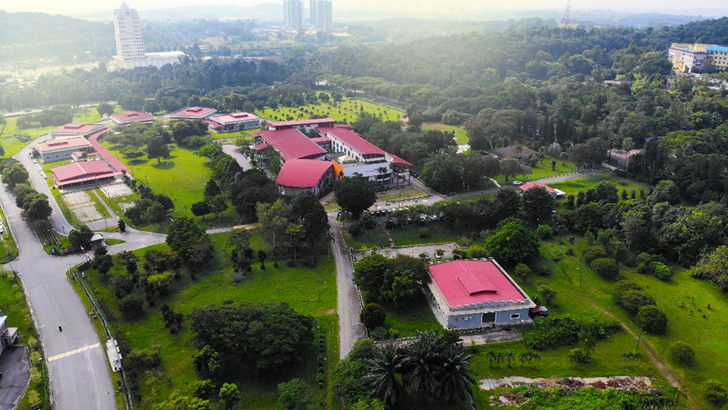
Often, universities have their own autonomy, jurisdiction areas and population, for example, Universiti Putra Malaysia, a mature and big university which has a large tract of lands and huge student population who are coming from all over the world. So, it is just appropriate and logical for a university to craft their own LA21 programs. However, LA21 programs at the universities must have profound impacts to the development of the human resources that have deep concern about sustainability. It is suggested that universities focus on talent development. Talents who are not only having good knowledge about sustainability but also exemplary citizens who care about sustainability and strive to be a leader for changes towards sustainability.
To produce talents that have deep knowledge about sustainability it is very necessary to design a curriculum that embeds sustainability philosophy and calls for action. It is true that each course in the universities may not directly contribute to sustainability issues, but students must be made aware that their actions will have an impact to sustainability. So, it is imperative that the program outcomes of each program be tailored towards awareness towards sustainability. Hence, the idea of embedding the framework of Education for Sustainable Development or ESD into curriculum design shall be lauded and encouraged.
After having a good and adequate knowledge about sustainability, it is very crucial to ensure universities students as well staff practice sustainable lifestyles on campus. To facilitate and promote sustainable lifestyles, policies and guidelines must be drafted to ensure universities can carry out necessary actions. The policies and guidelines must be comprehensive enough to cover all tenets of sustainability: environment, social and economy, on campus. For example, policies on the use of single plastic, waste and recycling facilities as well as healthy foods and lifestyle should be introduced. Furthermore, our campus must be planned and designed with nature and people in mind. The comprehensive integrated transportation system, green open and public spaces and low energy buildings should be main thrusts in campus planning and design. University campus ground images shall catalyst love for green environment and sustainable lifestyles which later can evoke sense of stewardship and ownership for the environment. Efforts are needed to in calculate awareness among students to look at the complex issues related to sustainability around them and find ways to solve the issues persistently.
University students, with knowledge and experience in living sustainably on campus, hope that they will serve a community and nation wisely upon graduation. But the most and profound impacts the university can provides to the world is to produce graduates that have deep sense of stewardship for the environment, community and the economy. A steward who in the long run will turn into a leader who promotes changes towards sustainability be it at family, community, businesses, politic and government level.
The world needs leaders that can act wisely when it comes to sustainability and what is the best place to nurture the leaders if not a university. It can be done as long as university be a place that issues been looked at, ideas can be raised, controversial ideas can be debated and developed and thus a creative, an open minded and sensitive graduates can be nurtured to make positive impacts to the world. Any attempt to curtail university freedom to nurture ideas and be critical will hamper efforts for sustainability.
Efforts towards sustainability is perhaps the most important task that needs to be carried out in the next decades by few generations and universities as places to produce future workforces, volunteers and leaders must take a lead. University must gain public thrust in leading sustainability efforts. Thus, universities must ensure their work will not be confined only to the university communities but provide profound impacts to the environment, society and economy. University must equip students as well as staff with proper and adequate knowledge about sustainability, adjusting campus ground to foster sustainable stewardship and nurturing future leaders to make changes for sustainability. It is not an easy task but one way to make it work perhaps if everybody acts in a sustainable way, but sustainable ways can work only if we adopt sustainable practice in our daily life and where can we start sustainable practice if not in the supposedly ideal places named universities.


Tarikh Input: 17/07/2024 | Kemaskini: 17/07/2024 | marini
PERKONGSIAN MEDIA