A micro-credential course is a short, targeted learning program designed to help individuals quickly acquire specific skills or knowledge needed in their profession. Unlike traditional degree programs, which can take several years to complete, micro-credential courses focus on providing concise, industry-relevant training that can be completed in weeks or months. These courses often result in digital badges or certificates, allowing learners to showcase their newly acquired competencies in a verifiable and shareable format. The flexible nature of micro-credentials makes them ideal for working professionals looking to upskill or reskill without committing to a full degree program, offering a quicker, more adaptable pathway to career advancement.
In the context of architecture and the built environment, micro-credential courses can be developed to address specific skills gaps identified in the industry. As the field of architecture rapidly evolves with new technologies such as Building Information Modelling (BIM), there is an increasing need for professionals to stay updated. Micro-credential programs in architecture can focus on key areas like digital construction tools, sustainable design practices, project management, and advanced visualisation techniques. These courses are often developed in collaboration with industry experts, ensuring the curriculum remains relevant and aligned with current professional standards. Additionally, micro-credential programs can be tailored to meet specific career pathways and job roles in the industry. For instance, specialised courses can be designed for roles such as VDC (Virtual Design and Construction) Coordinator, BIM Modeller, C&S (Civil and Structural) Modeller, MEP (Mechanical, Electrical, and Plumbing) Modeller, and Infrastructure Designer. By aligning the micro-credential courses with these standardised career offerings, educational institutions can ensure that learners acquire the specific competencies required for their chosen career paths. This approach not only enhances the employability of graduates but also meets the industry’s demand for specialised skills, helping employers fill critical roles with well-trained professionals.
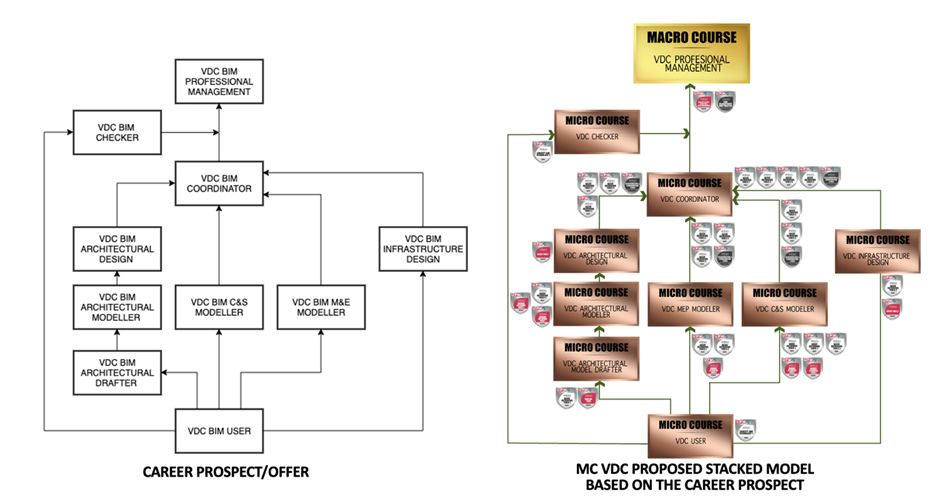
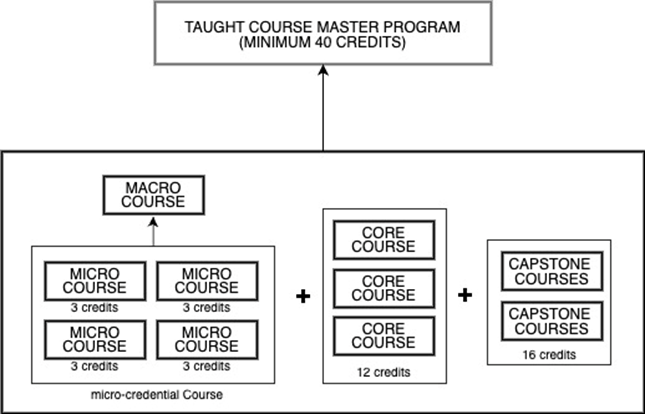
A significant advantage of micro-credential programs is the stackable format, where learners can accumulate badges or certificates from individual courses and progress towards a larger credential, such as a master’s degree. At UPM, the pathway to a master’s degree through micro-credentials can be structured using a combination of credits from micro courses, core courses, and project courses. The projected pathway for this micro-credential program starts with students completing 12 credits of specialised micro courses. Following this, students advance to 12 credits of core courses, which cover essential foundational concepts necessary for a deeper understanding of the field. The program culminates with a 16-credit capstone project course, where students apply their acquired knowledge in a comprehensive, real-world scenario. This stackable approach is designed to meet the minimum requirement of 40 credits for a master’s degree program at UPM, providing a clear, flexible progression route for learners while maintaining the academic rigor expected of a postgraduate qualification.
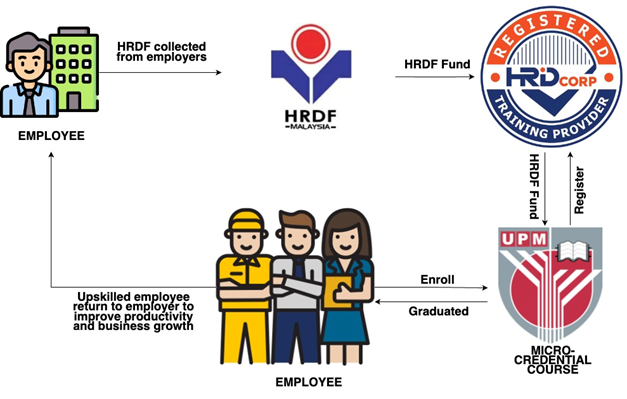
The payment structure for these micro-credential courses is designed to be accessible and aligned with industry standards. In Malaysia, employers registered with the Human Resources Development Fund (HRDF) are encouraged to support employee training and upskilling through HRDF-claimable programs. By offering HRDF-claimable micro-credential programs, UPM ensures that working professionals can access high-quality education without relying on personal study loans. The HRDF claimable status makes these courses more affordable and also helps companies meet their training obligations. This alignment with HRDF requirements encourages employers to support their employees in gaining new competencies, making micro-credential courses an effective way to enhance workforce skills, improve career progression, and meet the industry’s growing demand for specialised expertise.
Tarikh Input: 06/01/2025 | Kemaskini: 06/01/2025 | marini
PERKONGSIAN MEDIA