SOCIETY, ECONOMY, AND CREATIVITY: REVISITING ‘CREATIVE CAPITALISM’?
Dr. Mohd Shahrudin Abd Manan
Since the advent of societal, economic, and technological progress, creativity has emerged as a focal point of theoretical discourse. One key theoretical aspect is ‘creative destruction,’ a concept popularized by the Austrian economist Joseph Schumpeter in the mid-twentieth century (Schumpeter, 1994). It illustrates the phenomenon whereby new innovations and technologies replace outdated ones, sparking the restructuring of existing economic frameworks and the emergence of novel ones. The economic dynamism lies at the heart of capitalist evolution, where outdated industries and business paradigms give way to more innovative and efficient alternatives.
Expanding from this nexus of economic paradigms and innovative thinking, in the early 2000s, Richard Florida, an American economist, introduced the concept of the ‘creative city’ (Florida, 2002). Florida contextualizes his theory within the framework of the creative industry and spatial territorialization, emphasizing the significant role of a social segment of the workforce dedicated to generating fresh ideas, pioneering technologies, and imaginative content. He refers to them as the ‘creative class.’ This class includes scientists, engineers, architects, designers, artists, educators, and knowledge workers, who form the bedrock of innovative economies. Florida contends that cities boasting a substantial concentration of such creative class members tend to exhibit greater prosperity and ingenuity, thereby fostering economic growth and development.
In 2008, at the World Economic Forum in Davos, Switzerland, business magnate Bill Gates proposed the concept of ‘creative capitalism’ (Gates, 2009). While Florida’s paradigm emphasizes the macro geographical context, Gates’ theoretical approach leans toward microeconomics. Gates acknowledges a systemic flaw in the existing free-market system: technological advancement-driven economic prosperity often leaves a significant segment of less fortunate and poor people behind, as they lack the means to access its benefits. Economic markets, therefore, primarily respond to profit demand, neglecting crucial societal needs.
To address this issue, the economic system must display the creativity necessary to rectify such a problematic scenario. From this perspective, Gates argues that the post-industrial economic system requires redesigning to foster profits that can be ‘decentralized’—a compassionate profit that can be shared with others. Creativity in this context, according to Gates, goes beyond mere creation; it involves the act of sharing for collective benefits. Creative capitalism, therefore, emerges as a concept leveraging market forces and entrepreneurial skills to tackle social problems. It advocates for businesses to serve as a force for good, not solely for profit. In this paradigm, companies innovate not only to generate wealth but also to create social value and address pressing issues like poverty, healthcare, and education.
Today, after 16 years since Gates’ proposal, it seems that his idea merits revisiting—especially given the recent growing concerns about the widening gap of social inequality, rising living costs, as well as the unpredictable impact of climate change on our everyday lives. There is a pressing need now more than ever to adopt creative economic models that prioritize societal needs and collective prosperity.
After all, what is the purpose of creativity if not to improve our well-being as human beings?
References:
Florida, R. (2002). The rise of the creative class: And how it’s transforming work, leisure, community and everyday life. New York: Basic Books.
Gates, B. (2009). A new approach to capitalism. In M. Kinsley (Ed.), Creative capitalism (pp. 7-16). London: Simon & Schuster.
Schumpeter, J. A. (1994). Capitalism, socialism and democracy. (Original work published 1942). London: Routledge.
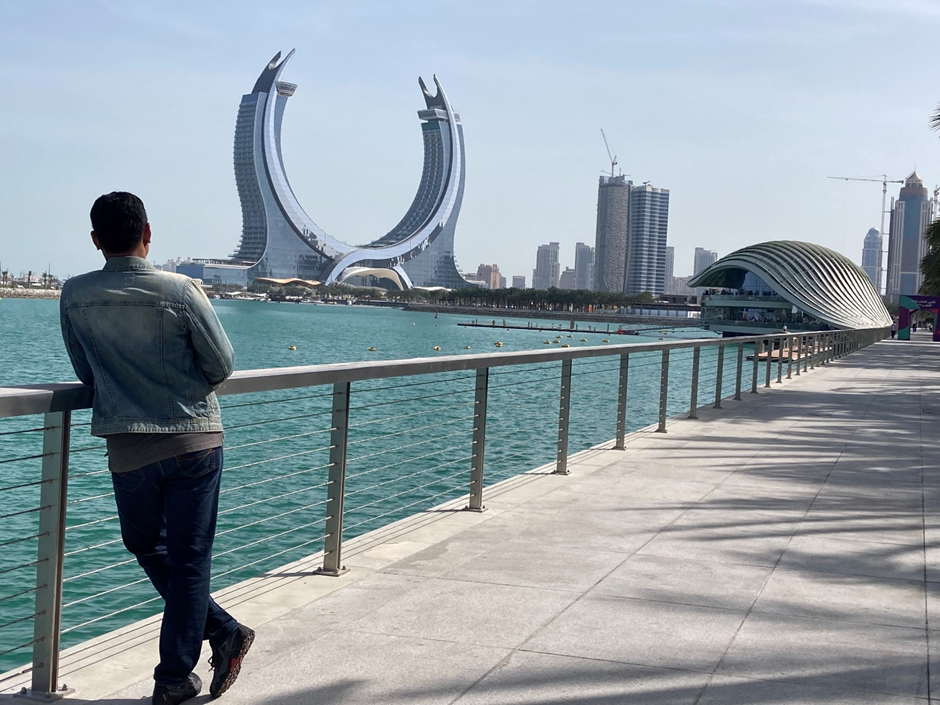
The architectural manifestation in Lusail city, Qatar within the creative industry. (Source: Author’s own photo, 2023)
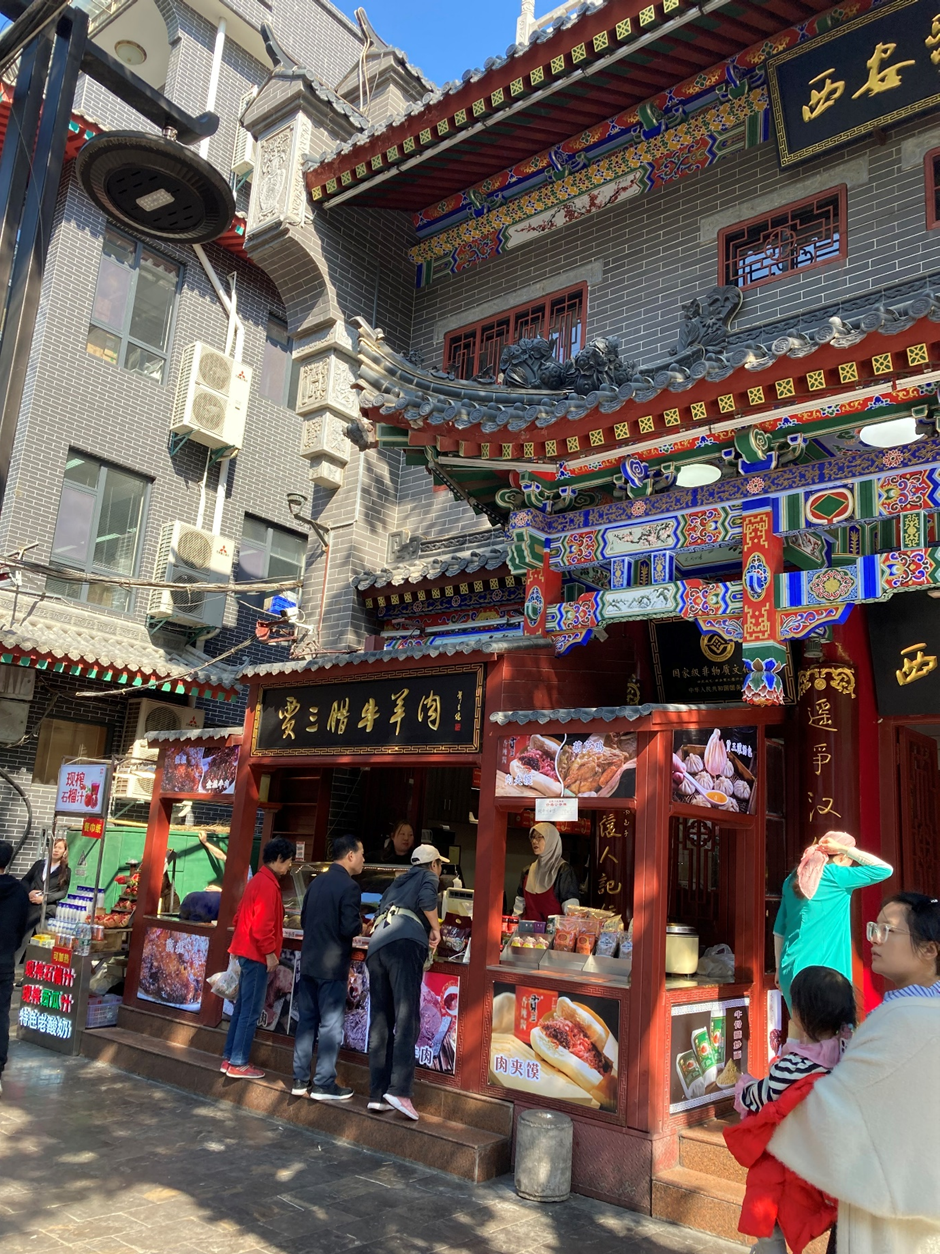
Intertwining creativity within the intricacy of capitalism in Xi’an city, China.
(Source: Author’s own photo, 2023)
Date of Input: 16/07/2024 | Updated: 16/07/2024 | marini
MEDIA SHARING